
CNN's Tokyo bureau was shaken up by themassive earthquake that struck Japan on Friday.
CNN reporter Kyung Lah showed viewers the chaotic scene that the quake caused, even hundreds of miles from the epicenter of the situation. She said she had been in a train station and that it became instantly clear that this earthquake was like none other she had experienced.
"You knew that this was different because it went on for quite a long time and you knew it was so strong," Lah said. "Normally if there's an earthquake, you look at your watch and move on."
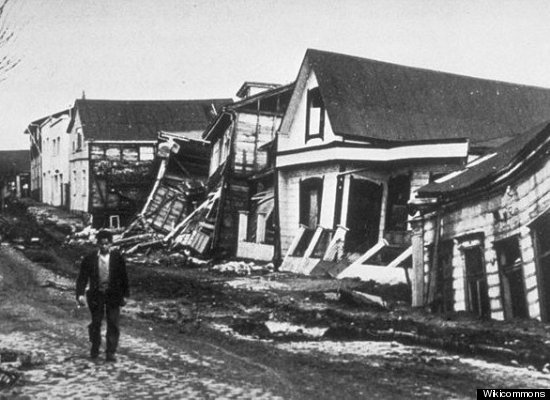
May 1960
A magnitude 9.5 earthquake in southern Chile and ensuing tsunami kill at least 1,716 people.
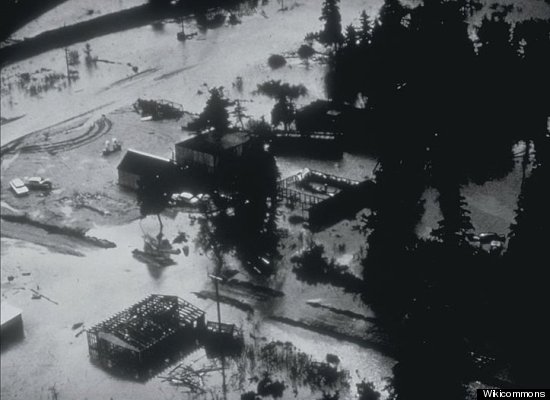
March 1964
A 9.2 magnitude earthquake in Prince William Sound, Alaska, and the resulting tsunami kill 131 people.
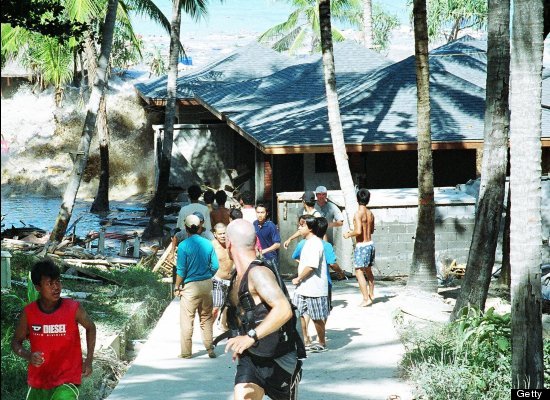
December 26, 2004
An Indian Ocean tsunami, triggered by a magnitude 9.0 earthquake, kills 230,000 in a dozen countries.
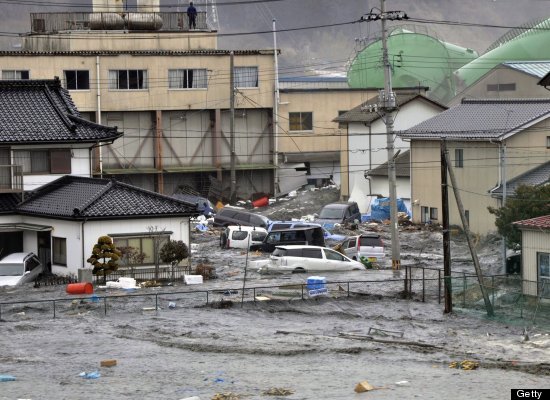
arch 11, 2011
A magnitude 8.9 quake strikes off the northeast coast of Japan, sending a tsunami across the Pacific and killing a still-undetermined number of people
On Sunday morning I got an email from a friend who works for a municipal utility -- I was expecting documentation on how to design incentives for utilities to help their customers save money instead of wasting electrons and carbon. So I was shocked when I opened it and discovered an early alert that the nuclear problems in Japan were much worse than being reported at that time, and that my friend was certain the reactor had already melted down.
He had started his career at the Brown's Ferry TVA nuclear power plant -- and he told me that the Fukushima reactors were twins of Brown's Ferry and that, based on his knowledge of the plants, the initial description of the problems was not plausible. Only a meltdown, perhaps partial, perhaps complete, could explain the damage being reported. And the reported injection of seawater, he said, required a breach in the containment vessel, and meant serious long-term releases of radiation. He also reported that if really bad radiation released occurred, the plume could travel across the Pacific and hit the West Coast with dangerous levels of radiation in a week to ten days. We now know that my friend was right -- there has been a partial meltdown at Fukushima, the seawater emergency fix does mean that there will be large, long-term releases of radiation, and this morning we have just learned that the fuel rods at one reactor have been exposed to air again, making a complete meltdown once again possible.
The global response has been revealing. The German government put on hold its plans to extend the operating life of its seventeen nuclear power plants. Switzerland, Italy, and Poland all announced they were reconsidering their nuclear-expansion plans.
Here in the U.S., Senator Joseph Lieberman called for the nation to put its plans for a nuclear revival "on hold." Massachusetts Congressman Ed Markey called for a moratorium of siting new nuclear reactors on seismically active areas and called for reactors in seismically active zones to be retrofitted with stronger containment systems.
A very different tune was coming from nuclear backers like Michigan Representative Fred Upton. Saturday night, Upton announced that his next hearing on the nuclear issue would focus on the question of "why it takes so long to go from start to finish on a new nuclear reactor. Why does it take us 10-12 years and it takes the French and the Japanese four to five years?" Upton asked, as the GOP leadership argued that nuclear should be part of its "all of the above" energy solution.
But the most startling comment came from Senate Minority Leader Mitch McConnell, who opined, "My thought about it is, we ought not to make American and domestic policy based upon an event that happened in Japan." McConnell has apparently overlooked the fact that the Fukushima Plant has essentially the same -- highly troubled and vulnerable -- Mark 1 reactor design as Browns Ferry and other plants in the U.S., or that, when Chernobyl melted down, the radiation did not stop at the Soviet border. Taken literally, McConnell's view suggests that the United States should never protect itself against a risk until an equivalent disaster has actually happened in this country. In other words, if a plane crashes in Europe, we shouldn't fix the stabilizers on the U.S. fleet even if we know they're defective! McConnell also went on record against learning from domestic disasters, saying that "I don't think right after a major environmental catastrophe is a very good time to be making American domestic policy," and arguing that the decision after Three Mile Island (which, recall, happened in Pennsylvania) to stop building more U.S. nuclear plants had been a mistake.
And overall, the U.S. media continued the drumbeat for a nuclear revival that has characterized Washington inside-the-beltway opinion for two years now. The media downplayed the possibility of a similar problem at a U.S. reactor. In the New York Times,John Broder quoted almost exclusively from pro-nuclear voices on whether the technology makes sense. In the San Francisco Chronicle, veteran science writer David Perlman reassured readers that experts have concluded that "a similar disaster would be highly unlikely here."
The expert logic Perlman cited focused on two differences: Our coastal reactors are on bluffs (and are therefore tsunami proof) and earthquakes as strong as the 8.9 Japan tremor are not expected here, even on California's San Andreas fault.
Well, not so fast, experts.
First, the San Onofre nuclear power plant in California is less than 100 feet above sea level. That's not high enough to be safe from a major tsunami, as the Japanese experience showed. Second, the most dangerous earthquakes anticipated in the U.S. are not in California, but along the New Madrid fault in Missouri, where quakes greater than 8.0 are expected, not as often as in California, but still too often for comfort. And unlike California quakes, which are relatively localized in their impact, New Madrid quakes affect huge areas -- and the nuclear plants in the Midwest have not really been designed for the possibility of an ultra-large quake in the region.
But really, the big issue is not whether the next U.S. nuclear disaster will look just like Japan's. Japan's did not look like Chernobyl, nor did Chernobyl look like Three Mile Island. Brown's Ferry almost melted down because of an accident with a candle! They all had one thing in common -- something went wrong, and the cooling systems in the reactors failed. Every nuclear power plant in the world, and every plant currently under construction, shares that vulnerability. Exactly what goes wrong -- what takes down the cooling system -- is unpredictable. It won't happen the same way twice. That's not reassuring -- it's terrifying.
My friend who had started his career at Brown's Ferry closed his second email to me saying that he hoped he was wrong. He wasn't, and his email shows why we shouldn't listen to experts who tell us "it can't happen here." My friend pointed out that "total loss of AC power, which they had, coupled with an earthquake and a tsunami is not a design basis that many plant owners or operators contemplate." He's right. That's the problem with nuclear technology. There are too many "worst-case" scenarios to include them all in a design basis or an operating plan. How many different forms could a terrorist attack take? And how many of those are adequately taken into account in the design of nuclear reactors? (Answer: very few.)
The problem with building nuclear power plants is not that they are likely to have an accident -- they aren't. In that sense, they're relatively safe. But the magnitude and consequences of even a single such accident are simply too large to warrant even a small risk. Several hundred miles of Japan's coastline were totally devastated by the tsunami. But the big worry facing the country, and the world, today is confined to two tiny sections of that devastation -- the nuclear power plants.
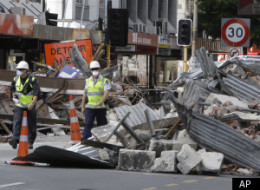
WELLINGTON, New Zealand -- A Chinese official said Monday that New Zealand should consider special compensation to parents of Chinese students killed in an earthquake last month because their loss was magnified under the country's one-child policy.
Seven students from China have been identified among the 166 confirmed deaths in the quake that devastated Christchurch city on Feb. 22, and as many as 20 others are still missing. Chinese Embassy official Cheng Lei said Monday that Chinese quake victims had lost not just their only child, but also a future breadwinner.
He said New Zealand should consider providing additional financial assistance to those families.
"You can expect how lonely, how desperate they are ... not only from losing loved ones, but losing almost entirely the major source of economic assistance after retirement," Cheng told Radio New Zealand.
Such compensation would be consolation for the families of the victims "but also a demonstration of the importance the New Zealand government attaches to the Chinese international" students, he said.
Prime Minister John Key said New Zealand had the greatest sympathy for the Chinese families and that they were eligible for compensation under an existing government accident insurance fund.
"The government's made it clear it will help in terms of repatriation of bodies and helping families so, outside of that, at this stage we don't have any intention to make any other changes," Key told reporters.
Key also confirmed on Monday that a planned government inquiry into the disaster would be a royal commission, a sub-judicial format that is the highest-level investigation New Zealand's parliamentary and justice system allows.
While the inquiry will be broad-ranging, Key said it would focus on the collapse of the Canterbury Television and Pyne Gould Guinness Corp. buildings in downtown Christchurch where many people died.
"We understand the need to provide answers about why such loss of life occurred in these buildings. The government is determined to get those," Key told a news conference.
The inquiry would thoroughly examine building codes and construction methods, and whether they were followed.
The inquiry will make a preliminary report within six months and deliver its final report within a year.
The Chinese embassy official's comments were absurd, of course the parents are grief stricken at the loss of their children, but;
New Zealand did not institute the one child ruling, it did not force the students to study in New Zealand and it did not cause the earthquake
Also his comments on the future economic disadvanta
New Zealand did not institute the one child ruling, it did not force the students to study in New Zealand and it did not cause the earthquake
Also his comments on the future economic disadvanta
The thing is that if the Chinese government doesn't do something more for the victims, people would be complainin
Personally I think Chinese government is stupid for requesting
Personally I think Chinese government is stupid for requesting

No comments:
Post a Comment