
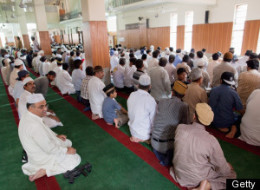
The country’s top Islamic authority will set up a think-tank to encourage more preaching in the content produced The crisis in Egypt has re-ignited the debate of whether moderate Islam is a reality or just a show. Political and religious dissatisfaction, especially in the Third World, demonstrate the need for a new leadership philosophy. In an NBC interview shortly after Faisal Shahzad's 2010 arrest, I was asked, "Do you think more moderate Muslims need to stand up against radical Islam?" "Absolutely!" I replied. In response, I was asked: Well, what exactly is a moderate Muslim? In the absence of a unified voice from the Muslim world and with time running out, it seems few have a clear idea. However, for well over a century the Ahmadiyya Muslim Community has practically defined, through the Quran and Prophet Muhammad's life, what it means to be a moderate Muslim. First, a moderate Muslim recognizes that Islam requires complete separation of mosque and state. The Quran does not endorse any particular government philosophy, but instead requires that justice, not religion, be the determinative factor when governing (4:59). Extremists, like the Wahabbis, ignorantly preach that Islam requires the imposition of sharia on non-Muslims. But since the Quran categorically forbids all religious compulsion (2:257), such an imposition find no Islamic justification.
Contrary to Faisal Shahzad's ambitions, the Quran requires a Muslim to obey and be loyal to those in his charge. Prophet Muhammad added, "You should listen to and obey your ruler, even if you [despise him]." While national loyalty does not forbid dissent, that dissent must be expressed legally and peacefully -- never violently. Critics like Robert Spencer claim Islam allows Muslims to engage in taqiyya, treachery against non-Muslims. However, the Quran unequivocally forbids lying or hiding the truth and Prophet Muhammad instructed, "It is obligatory for you to tell the truth."
Moderate Muslims reject violent jihad, recognizing that true Jihad is the struggle to attain nearness to God through good works. Would-be Portland bomber Mohamad Mohamed apparently never read the Quranic verse, "... whosoever killed a person... it shall be as if he had killed all mankind" (5:33). If Mohamad Mohamed felt persecuted, the Quran requires that a Muslim facing persecution must sooner emigrate than retaliate (4:98). Even after facing 12 years of actual persecution in Mecca, Prophet Muhammad rejected all forms of terrorism, instead ordering his followers to migrate to preserve the peace.
In response, critics cite the abrogation argument, asserting that later "violent" verses of the Quran abrogate earlier "peaceful" verses. Far from abrogating any verse of the Quran, these so-called violent verses permit self-defense and mandate the protection of universal religious freedom. For example, the Quran states, "Permission to fight is given to those against whom war is made..." (22:40). A moderate Muslim recognizes that the Quran permits (not commands) self-defense if attacked after emigration. The next verse commands Muslims to indiscriminately protect all places of worship. This teaching is neither unjust, nor does it nullify any prior verses.
Therefore, a moderate Muslim recognizes that Prophet Muhammad promoted freedom of religion and speech for all mankind, without threat of punishment for blasphemy or apostasy. This is one reason why Ahmadi Muslims vehemently reject anti-blasphemy legislation and instead support both the First Amendment and the Universal Declaration of Human Rights.
Moderate Muslims also recognize the equality and empowerment of women. Prophet Muhammad clearly stated that education is a fundamental right for Muslim women. His first wife Khadija was an accomplished entrepreneur and his wife Ayesha was a prolific jurist. While Islam urges both sexes to dress modestly and guard their eyes, women are enjoined to cover their heads and wear an outer garment to conceal their beauty from strangers. Her dress encourages society to focus on her intellectual merit rather than her physical characteristics. Indeed, a December 2010 New York Times article reported that American Muslim women have "achieved a level of success and visibility unmatched elsewhere." Modestly dressed Muslim women are active in every sphere of life as doctors, lawyers, journalists, engineers, politicians, as well as mothers and wives. Furthermore, the Quran is clear that both sexes are equal in matters of spiritual salvation (4:125).
Additionally, a moderate Muslim recognizes that Islam does not monopolize salvation. Rather than condemn non-Muslims to eternal hell, the Quran declares that God's prevailing mercy offers salvation to all Jews, Christians and people of other paths who believe in God and do good works (2:63). Extremists await a bloody Messiah who will kill all non-Muslims to attain worldly Islamic domination. However, moderate Muslims recognize that a prophet's only responsibility was the delivery of the message. Compulsion was categorically forbidden. Consequently, the Ahmadiyya Muslim Community are Muslims who believe in the Messiah, Mirza Ghulam Ahmad of Qadian. Ahmad, like Jesus, came to end religious wars, and unify mankind under one flag of peace and tolerance.
This definition of moderate Islam has fared extremely well for the Ahmadiyya Muslim Community. In just a century, Ahmadi Muslims have established themselves in nearly 200 countries with millions of adherents, hundreds of schools and dozens of hospitals. Their membership includes the Muslim world's first Nobel Prize winner in Dr. Abdus Salam and the only Muslim President of the UN and World Supreme Court in Sir Zafrullah Khan. Perhaps most importantly, they live as loyal and productive citizens to each of their respective countries, demonstrating that moderate Islam practically thrives in this world -- not just in theory. As organizations the world over scramble to define moderate Islam, the Ahmadiyya Muslim Community extends an invitation to adopt a century old tried and true method -- and you don't even need to be Muslim to endorse it.by the local media industry, Senator Datuk Seri Jamil Khir Baharom said today.The minister for Islamic affairs announced that the Islamic Development Department (Jakim) will set up the facility after delegates at the “Innovations of Dakwah through broadcasting” discourse agreed that local Islamic content in television programmes and films lacked direction.
Jakim director-general Datuk Wan Mohamad Sheikh Abdul Aziz said local television channels have failed to portray that Islam is a way of life.
“Television has only focused on segments of the religion. We only discuss rituals but not in terms of Islam’s relation with science, politics and technology,” he said.
“We need topics which touch on contemporary issues such family and multi-racialism from an Islamic perspective,” he said.
Scholar and author Maszlee Malik said local Islamic content lacked substance and philosophy.
“We need a philosophy on what we want to bring to the audience and how they understand Islam,” he said.
He said the media industry was too reliant on marketing and profits instead of wanting to educate the public.
“Al Jazeera is able to perform better than CNN and BBC because it has its own research institute. So I hope local industry executives will not put aside our scholars when they do their programming.
“Also, I want remind our religious scholars not to ignore technocrats because we are still far behind in terms of dakwah on the Internet and social media,” he said.
Nasir Abdul Rahman pointed out that a major problem with local media content was that it portrayed converting to Islam as being similar to becoming a Malay.
“Islam is for all. We want Islamic programming which respects the culture of every community,” said the lecturer from the International Islamic University of Malaysia (IIUM).
Alex Koh Kee Kiat, from Studio Muallaf and Friends, said there should be more shows which educate non-Muslims on the beauty of Islam.
“When we talk to non-Muslims, we can see that they are attracted to Islam but their arguments and understanding are limited to what they know.
“Once they know what Islam is and if Allah wills, they will revert to Islam,” he said.
Islamic motivational speaker Dr Rubiah Kulop Hamzah said television programmes must not only strengthen faith in Allah but confidence in the Islamic way of life.
“We also see ustaz (religious teachers) when there are ghosts in films. Whenever there are ghosts then only we see ustaz. This is not Islam,” she said.
Rubiah also criticised Malay dramas and films for their unIslamic elements.
“Where are the Islamic values in terms of dressing, story and manner of talking?” she asked.
Syed Zulkifli Jamalulail, from the Film Directors Association of Malaysia (FDAM), said Islamic programming should not focus on those who have accepted Islam.
“We want to convince those who are not convinced,” he said.
The country currently has three channels focusing on Islamic lifestyles — Astro’s Oasis, Media Prima Berhad’s TV9 and recently launched TV Al-Hijrah, which is under the Prime Minister’s Department.
The country’s first free-to-air, high-definition channel, TV Al-Hijrah is set to cost the government more than RM60 million.
By Arlina Arshad
Jakarta: To most Indonesians, Ahmad Mustofa Bisri is an influential Muslim cleric and a respected figure from the country's biggest Islamic organisation, the moderate Nahdlatul Ulama.
 But to his 7,000-odd followers on Twitter, the 66-year-old is "Kyai Gaul", or the Trendy Cleric, who thumbs daily Islamic greetings on his iPad and Blackberry.
Bisri is among a number of Islamic leaders -- conservative and liberal -- who are turning to the Internet in the strugglefor the hearts and minds of the faithful in the world's largest Muslim-majority country.
"I set up an account last month because I like to make friends with everyone. I don't position myself as a mufti, a religious authority. I only share what I know," said Bisri, who is better known as Gus Mus or "Brother Mus" -- short for Mustofa.
"It's important for those who understand the faith to spread the word. Those who don't know, but say they do, may mislead," he added.
Besides microblogging site Twitter, he has been preaching religious tolerance and moderation on social networking site Facebook, where he has 2,600 "friends" and 62,000 "fans".
Islamists from hardline groups like Hizbut Tahrir Indonesia and the Islamic Defenders Front (FPI) also have a Web presence, using the modern medium to advocate ancient capital punishments like stoning for adulterers.
The battle for Indonesia's Islamic identity is just one way the Internet is shaping and transforming public debate in the country of 240 million people, where Web usage has exploded in the past five years.
With its booming economy and burgeoning middle class, the archipelago has rapidly become one of the world's biggest Twitter users, according to online research firm comScore.
Of 41 countries surveyed, it had the highest percentage of Internet users at home and work accessing Twitter in June 2010, or more than 20 percent of its 45 million people online, comScore said.
No one who wants to be anyone -- not even the stick-wielding, fringe-dwelling religious fanatics of the FPI -- can afford not to have a Twitter account and a Facebook page in Indonesia.
And almost inevitably in a country as diverse as Indonesia, questions of faith consistently top the list of trending topics of debate.
Twitter "wars" are being waged on a daily basis between liberals who promote pluralism and religious tolerance, and conservatives who advocate a stern interpretation of Islam and strict moral values.
Some of the old elite are uncomfortable in the brave new world of instant communication and user-generated content.
Scandalised by the release online of a local rock star's homemade sex videos earlier this year, President Susilo Bambang Yudhoyono warned that the Internet "frenzy" was a threat to the nation's moral fibre.
But blogger Purwaka, known online as Blontank Poer, says the more open flow of information and opinion is good for a country that emerged from the tight grip of military strongman Suharto only in 1998.
"Twitter wars are good wars," the 42-year-old said.
"The winner is the public. They gain a better understanding of Islam and can make their own conclusion after hearing different opinions from experts on the faith," he added.
From homosexuality to atheism and the treatment of minorities, Indonesians are finding they can talk about subjects online which they would be reluctant to discuss in their offices, classrooms and around their kitchen tables.
Communications Minister Tifatul Sembiring, a conservative Muslim, is one of the nation's most prolific and controversial Tweeters and boasts 120,000 "followers" -- or other users who subscribe to his comment stream.
He drew international ridicule with a post describing how, as a pious Muslim, he had reluctantly shaken hands with US First Lady Michelle Obama at a state reception in Jakarta last month.
One of his critics, liberal Muslim scholar Ulil Abshar Abdalla, Tweeted to his 35,000 followers: "Enough, enough, from now on, shaking hands with non-mahrams (those unrelated by marriage) is allowed."
"It's halal (permissible) if it's the level of Michelle Obama," he added.
Gus Mus advised the minister to "calm down" and put his beliefs in perspective.
"Calm down, sir. God is too BIG to supervise your handshaking with Mrs. Michelle," he commented.
Sembiring later clarified his position in a series of Tweets, which only generated more howls of embarrassment from his liberal opponents.
"I'm fine as long as there's an open debate and people convey their messages politely, without curses and insults," the minister told AFP.
"I'll usually talk to them but if they continue insulting me and refuse to act in a civilised manner, after two to three times, I'll block them."
IT researcher and free-speech advocate Donny Budi Utoyo said that while Muslim leaders had different views, those engaged in social networks shared an ability to cope with criticism and the cut and thrust of the new media.
"Both the liberal and conservative leaders who have joined Twitter so far seem to be open people who know how to smile. If they're attacked, they respond in a positive manner," he said.
"This reflects the maturity of mind that is needed for any process of dialogue to be effective."
(Courtesy: AFP, December 17, 2010)
"My student just sent 500 of his closest friends and me an e-mail that says Obama is a radical Muslim only pretending to be a Christian. He wrote that if Obama becomes president, our country will be run by a terrorist. How should I respond to his e-mail?" This was the last question -- the stumper -- in a long and grueling interview. I hardly had an answer to the question at the time; more has become discouragingly clear since.
At the time of my interview, then-Senator Obama was running for president and engaging in online organizing as no candidate had done before. Supporters could donate to his campaign at the click of a button, after watching motivational speeches that reverberated across YouTube, and then sign up to volunteer at a local campaign office. Obama was inaugurating new online campaigning strategies -- and the responses to his campaign were a similar portend for what lay ahead: hateful e-mails and blog posts and the use of social media to create rumor-mills.
While many groups and individuals have fallen pray to the scathing "echo-chambers" created in chatrooms, blogs, and Facebook communities, a disproportionate number appear to be Muslim or, like our president, those arbitrarily called "Muslim," as though it were a term of denigration. Whenever a bomb goes off or a round of shots is fired -- even if by a Basque Separatist, Hindu Nationalist, atheist, Christian, or Jew -- the blogosphere fills with venom about Muslims. "Could it be a Muslim?;" "She must be a Muslim;" "Islam teaches hate ... go figure;" "let's kill the Muslims before they kill us."
The ideas reverberate and reverberate, confirming people's preexisting prejudices. By the time the bloggers and their online communities have exchanged blog posts about an event or idea, everyone is convinced of their bigoted perspectives.
A classic example of this took place this summer. Some witty journalist decided to affix a new label to the Muslim community center set to house the same group that had been gathering in lower Manhattan for 25 years. It was no longer just a community center -- it was now the "WTC Mosque." The name then bounced to another part of the blogosphere, landing on the screen of a prominent blogger who re-labeled it "Monster Mosque." A few bounces later, and the name "Ground Zero Mosque" stuck for good.
A reporter and some glib bloggers transformed a legal question (the right of the religious community to use property zoned in a particular way) into a distorted, nightmarish question about whether we as Americans could let "terrorists" claim "victory" "at" the World Trade Center. It became instant national news -- and reverberated in the blogosphere overseas, confirming the unfortunate perceptions of those who never thought Muslims would have a fair chance in America anyway.
None of this would have been possible without the large, growing, and raucous blogosphere and the critical mass of Islamophobes who inhabit it. Unlike Internet skeptics ever predicted, the blogosphere now has profound consequences for politics and the public perceptions that underlie it.
So, getting back to the interview, what can be done? Or, more pointedly, "How should I respond?" Finally, years later, I have some thoughts.
The first is countering misperceptions with fact. When someone spits venom or generalities about Muslims online to thousands of their closest "friends," factual, reliable information is a potent antidote. Cite sources, quote experts, and establish the information you do provide as more credible. In the world's first era of "too much information," credibility is a kingmaker.
The second is presenting that information in an engaging way. It is bland (at least by Internet standards) to note that "Senator Obama has demonstrated his Christian faith repeatedly, and there is no credible evidence to suggest that any terrorist organization has established ties with him." Readers will already have clicked on to another site by the time they get halfway through that sentence. By contrast, an exclamation can say it all: "How many times has a guy gotta convert before he's a Christian?!" Intermingling these exclamations with more careful statements of fact are the strongest combination of all.
The third is helping to fill the blogosphere with voices that don't accept bigotry. This can be as simple as responding to inaccurate or bigoted articles or as elaborate as creating articles, videos, and chatrooms dedicated to combatting hatred and correcting misperceptions. There is already a critical mass of people online who further Islamophobia (and anti-Semitism, racism, and xenophobia) as though it were their day jobs. Much as E-Islamophobia produces negative results in the real world, so too can E-activism reverse or preempt them.
So long as bigotry goes unchecked, it will hold a disproportionate influence in both realms. Yet this need not be the case. The hatewave is here, but our beliefs charge us to counter it. See you online.
This article has been cross-posted by Rabbis for Human Rights.

No comments:
Post a Comment