
The decision whether Malaysia will proceed with its proposal to build two nuclear power plants will be made after the Cabinet has evaluated the paper to be submitted by Malaysia Nuclear Power Corporation.
Energy, Green Technology and Water Minister, Datuk Seri Peter Chin Fah Kui, said whether the proposed plan was on or not, it was not for him to decide.
"It is for the Cabinet to decide. We have to wait for the report to be presented to the Cabinet," he said.
Chin said this to reporters after unveiling the electric bikes by Eclimo Sdn Bhd here Wednesday.
Earlier, in his address, Chin said the adoption and application of green technology was crucial as it was the only way forward for sustainable growth and development.
He said the government strongly felt that green technology has a crucial role to play in being part of the solution to climate changes.
"Green technology is the government's latest proactive action to spur industries and institutions to be eco-technological innovators in the field of eco-designs, eco-materials, eco-products and services as well as low carbon green technologies," he said.
He said his ministry was currently preparing the Electric Vehicles Infrastructure Roadmap and the Fleet Test Vehicles Programme in Putrajaya which would be launched soon.
Chin said talking about 'greening' would not be complete without addressing the energy-efficiency issues.
"Therefore, under the Energy Efficiency Masterplan, the government is looking into the energy efficiency in transportation sector.
"I believe the initiatives undertaken will provide a conducive-enabling environment for the development of electric vehicles in the transport sector, including electric bikes," he said.
-- BERNAMA

Behind Japan's escalating nuclear crisis sits a scandal-ridden energy industry in a comfy relationship with government regulators often willing to overlook safety lapses.
Leaks of radioactive steam and workers contaminated with radiation are just part of the disturbing catalog of accidents that have occurred over the years and been belatedly reported to the public, if at all. In one case, workers hand-mixed uranium in stainless steel buckets, instead of processing by machine, so the fuel could be reused, exposing hundreds of workers to radiation. Two later died.
"Everything is a secret," said Kei Sugaoka, a former nuclear power plant engineer in Japan who now lives in California. "There's not enough transparency in the industry."
Sugaoka worked at the same utility that runs the Fukushima Dai-ichi nuclear plant where workers are racing to prevent a full meltdown following Friday's 9.0 magnitude quake and tsunami.

In 1989 Sugaoka received an order that horrified him: edit out footage showing cracks in plant steam pipes in video being submitted to regulators. Sugaoka alerted his superiors in the Tokyo Electric Power Co., but nothing happened – for years. He decided to go public in 2000. Three Tepco executives lost their jobs.
The legacy of scandals and cover-ups over Japan's half-century reliance on nuclear power has strained its credibility with the public. That mistrust has been renewed this past week with the crisis at the Fukushima Dai-Ichi plant. No evidence has emerged of officials hiding information in this catastrophe. But the vagueness and scarcity of details offered by the government and Tepco – and news that seems to grow worse each day – are fueling public anger and frustration.
"We don't know what is true. That makes us worried," said Taku Harada, chief executive of the Tokyo-based Internet startup Orinoco. Harada said his many American friends are being urged to leave the capital while the Japanese government says the area is safe, probably to avoid triggering panic.

The difference is unsettling, he said. He has rented an office in Osaka 250 miles (400 kilometers) to the southwest to give his 12 employees the option of leaving Tokyo.
"We still don't know the long-term effects of radiation," he said. "That's a big question."
Tokyo Electric Power Co. official Takeshi Makigami says experts are doing their utmost to get the reactors under control.
"We are doing all that is possible," he told reporters.
Worried that over-dependence on imported oil could undermine Japan's humming economy, the government threw its support into nuclear power, and the industry boomed in profile and influence. The country has 54 nuclear plants, which provide 30 percent of the nation's energy needs, is building two more and studying proposals for 12 more plants.
Before Friday's earthquake and tsunami that triggered the Fukushima crisis and sent the economy reeling, Japan's 11 utility companies, many of them nuclear plant operators, were worth $139 billion on the stock market.
Tepco – the utility that supplies power for Japan's capital and biggest city – accounted for nearly a third of that market capitalization, though its shares have been battered since the disasters, falling 65 percent over the past week to 759 yen ($9.6) Thursday. Last month, it got a boost from the government, which renewed authorization for Tepco to operate Fukushima's 40-year-old Unit 1 reactor for another 10 years.
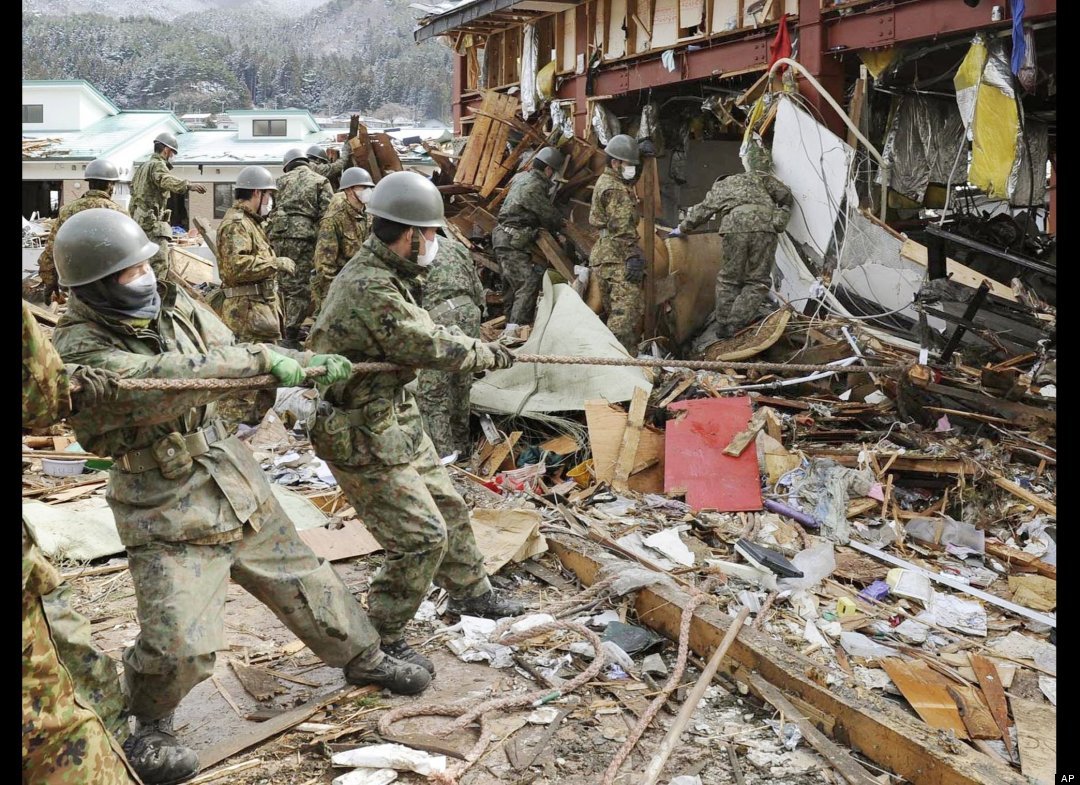
With such strong government support and a culture that ordinarily frowns upon dissent, regulators tend not to push for rigorous safety, said Amory Lovins, an expert on energy policy and founder of the Rocky Mountain Institute.
"You add all that up and it's a recipe for people to cut corners in operation and regulation," Lovins said.
The United States, Japan's close ally, has also raised questions about the coziness between Japanese regulators and industry and implicitly questioned Tokyo's forthrightness over the Fukushima crisis. The director of the U.S. Nuclear Regulatory Commission and the U.S. ambassador this week issued bleaker assessments about the dangers at the plant than the Japanese government or Tepco.

Competence and transparency issues aside, some say it's just too dangerous to build nuclear plants in an earthquake-prone nation like Japan, where land can liquefy during a major temblor.
"You're building on a heap of tofu," said Philip White of Tokyo-based Citizens' Nuclear Information Center, a group of scientists and activists who have opposed nuclear power since 1975.
"There is absolutely no reason to trust them," he said of those that run Japan's nuclear power plants.
Japan is haunted by memories of past nuclear accidents
.
_In 1999, fuel-reprocessing workers were reported to be using stainless steel buckets to hand-mix uranium in flagrant violation of safety standards at the Tokaimura plant. Two workers later died in what was the deadliest accident in the Japanese industry's history.
_ At least 37 workers were exposed to low doses of radiation at a 1997 fire and explosion at a nuclear reprocessing plant operated in Tokaimura, northeast of Tokyo. The operator, Donen, later acknowledged it had initially suppressed information about the fire.
_ Hundreds of people were exposed to radiation and thousands evacuated in the more serious 1999 Tokaimura accident involving JCO Co. The government assigned the accident a level 4 rating on the International Nuclear Event Scale ranging from 1 to 7, with 7 being most serious.
_ In 2007, a powerful earthquake ripped into Japan's northwest coast, killing at least eight people and causing malfunctions at the Kashiwazaki Kariwa nuclear power plant, including radioactive water spills, burst pipes and fires. Radiation did not leak from the facility.

Tepco has safety violations that stretch back decades. In 1978, control rods at one Fukushima reactor dislodged but the accident was not reported because utilities were not required to notify the government of such accidents. In 2006, Tepco reported a negligible amount of radioactive steam seeped from the Fukushima plant – and blew beyond the compound.
Now with the public on edge over safety, Tatsumi Tanaka, head of Risk Hedge and a crisis management expert, believes the government would find it difficult to approve new plants in the immediate future.
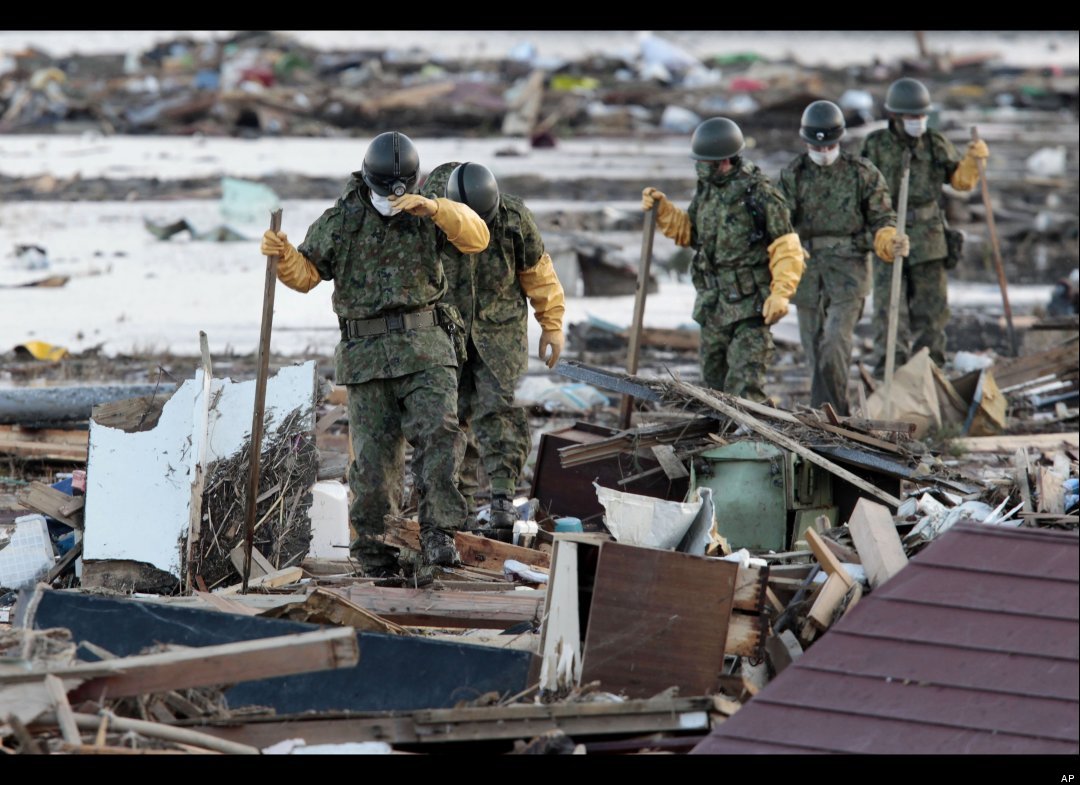
Tanaka says that, true to Japan's dismal nuclear power record, officials bungled the latest crisis, failing to set up a special crisis team and appoint credible outside experts.
Tokyo Electric Power Co., regulators and the government spokesman have been holding nationally televised news conferences, sometimes several a day, on the latest developments at the Fukushima plant.

But the reactors have been volatile, changing by the hour, with multiple explosions, fires and leaks of radiation. The utility, regulators and government spokesmen often send conflicting information, adding to the confusion and the perception they aren't being forthright, Tanaka says.
"They are only making people's fears worse," he said. "They need to study at the onset what are the possible scenarios that might happen in about five stages and then figure out what the response should be."
___
Associated Press writers Joji Sakurai and Mari Yamaguchi in Tokyo and Justin Pritchard in Los Angeles contributed to this report.

'Justice' for Bhopal is just political farce
By M J Akbar
By M J Akbar
Trust me: if thousands of politicians, or their cousins, the nouveau riche, had died on that apocalyptic night in Bhopal, Anderson would still be in an Indian prison, rather than in America, protected by his company, and the company that his company keeps. But only the poor died in Bhopal. We treat our poor as dispensable chattel whose death is meaningless in the economic calculus, since there is no shortage of supply. Bhopal is class war.

APIn this Nov. 21, 2009 photo, a rusting container is seen at the Union Carbide pesticide plant, where 40 tonnes of lethal methyl isocyanate (MIC) gas leaked nearly 25 years ago, in Bhopal.
Cynicism is never irrational. The irrational, often wrong, sometimes right, are impelled by instinct, heart or even conscience. Cynics are morality-proof. They prefer data to truth.
Delhi has set the gold standard for cynicism. It operates on four axioms: public memory is a dwarf; anger is effervescent; media can be massaged at the appropriate moment; any public crisis can be assuaged with crumbs, while the promotion of private interests continues off-screen.
Jairam Ramesh’s promise of a Green Tribunal in Bhopal is a classical instance of a crumb dipped in the pickle of hypocrisy. Where was this or any other tribunal in the last 26 years when the dead, the deformed and blind babies and the stillborn fetuses were a reminder that justice must be done? Or is this tribunal meant for the next onslaught by the dogs of chemical war upon the sleeping slums of Bhopal? Who was Veerappa Moily trying to fool when he claimed that the case against Warren Anderson had not been closed? Why doesn’t he keep the case open for a few more years, until God closes the chapter by taking Anderson away to whichever destination has been allotted to the butcher of Bhopal? A Group of Ministers has been appointed — merely to buy time until the return of amnesia.
The true Bhopal verdict was delivered within four days of the tragedy, in December 1984, not on June 7, 2010, when Anderson was smuggled out of Bhopal on a state government aircraft and then put on a plane to America. Since then we have witnessed a pretend-justice farce played out by government, police and the judiciary, including the Supreme Court. The last is most culpable, since we hold a Chief Justice of India like A M Ahmadi to higher standards of probity than we do politicians or policemen. Ahmadi got his proper thank you note after he retired.
Chief judicial magistrate Mohan Tiwari’s judgment served only one useful purpose. The sheer scale of its magnanimity towards the accused lit a fuse under the volcano of collective guilt. The lava is spewing from myriad crevices, scorching and burning many-layered masks that have hidden deceit for a generation. As memories were stoked, officials, some perhaps frustrated by the fact that their silence had not been rewarded, revealed how successive governments had intervened to slow down the judicial process and sabotage any chance of Anderson’s extradition. Union Carbide and its collaborators, including Indians of course, have sustained themselves with a lie, that it was an Indian disaster since the plant was built and run by Indians. The design is an exact replica of an American plant, and an American who was terrified of being tried in India was in charge of management.
The political establishment assumed that June 7 would be just another day in a long calendar, possibly punctuated by an occasional, futile scream. The court was fortified, and entry denied to petitioners, victims and media. My one memory of this courtroom, gleaned from television, shall be of the smug grin of an obese policemen laughing at two old women, their faces contorted by rage and frustration, who knew that the system which had stolen their lives had also cheated their children in death.
Trust me: if thousands of politicians, or their cousins, the nouveau riche, had died on that apocalyptic night in Bhopal, Anderson would still be in an Indian prison, rather than in America, protected by his company, and the company that his company keeps. But only the poor died in Bhopal. We treat our poor as dispensable chattel whose death is meaningless in the economic calculus, since there is no shortage of supply. Bhopal is class war.
Is it surprising — or not? — that while even the Obama administration jumped in with some gratuitous advice, Dr Manmohan Singh had nothing to say? Perhaps the Prime Minister would have been repetitive. In essence, the signal from Washington and Delhi is the same: forget the dead, get on with multinational life.
Barack Obama was not elected to ensure justice for the Indian victim. He is in the White House to protect American business, and defend the two-laws theory that motivates American international relations, whether in war or peace. When 11 American workers were killed in an oil rig blow-up in the Gulf of Mexico, Washington demanded $1.5 billion from BP. Nearly 20,000 dead in Bhopal, half a million affected, and the total compensation is $470 million. Do the math. Obama has promised to penalize BP for the current oil spill to the extent of many billions of dollars. Magistrate Manoj Tiwari wants only Rs 5 lakh as reparation from Carbide for mass slaughter.
When Exxon was fined $5 billion for the Alaska oil spill, nearly $40,000 was spent on the rehabilitation of every affected sea otter. The victims of Bhopal are, so far, entitled to $200 each.
Don’t do the math. It may turn you into a cynic.
Ghost Towns: Places Abandoned Due To Disasters (PICS)

Disaster comes in differing dark shades of bleak and deadly flavors of horrendous dismay, such as environmental, economic, and natural. Across the globe, there are hundreds of ghost towns and places which were abandoned due to disasters.
Chernobyl Disaster


(image credits:wikimedia,wikimedia)
In 1986, Reactor 4 exploded at Chernobyl Nuclear Power Plant. Four workers were killed instantly. Steam explosions and fires released about 5% of the radioactive reactor core into the atmosphere. The nuclear meltdown blew downwind on cities and even into different countries.
Prypiat, Ukraine

The nearby city of Pripyat, Ukraine, was home to the workers of Chernobyl Nuclear Power Plant.

The Chernobyl explosion happened at around one in the morning when most of the 50,000 people in Pripyat were sleeping.

40 hours later, residents were ordered to evacuate. By then, many of the people had suffered from radiation poisoning.

Pripyat had one hospital, 3 clinics, 21 schools, 3 cultural centers, 10 gyms, 10 shooting galleries, 3 indoor pools, and one railway station. It also had one recreation park, 35 playgrounds, 25 malls and stores, and 27 cafes. But in a blink, Pripyat no longer had people.


(image credits: wikipedia,david-angel,dirjournal,wikimedia)
Pripyat is still mostly abandoned. Very few workers returned. Reports of how many people died or will develop cancer and die due to the nuclear meltdown at Chernobyl are widely differing.
Centralia, Pennsylvania

Welcome to hell ― or Centralia, Pennsylvania, where the coal mine started to burn underground in 1962. The mine fire is still burning today beneath a ghost town. The Post Office even revoked Centralia’s zip code.

Most of the buildings were lost to fires or acts of nature. In 2010, only five homes remain. State officials are trying to vacate any remaining residents and demolish what’s left of the town.

(image credits: wikipedia,Angela Parriott,road_less_trvled,t3hwit)
A time capsule was buried in 1966 and is supposed to be opened in 2016 when former residents were to return to their lives. With the underground mines still on fire, it seems doubtful Centralia will be able to start over in six years.
Varosha, Cyprus

Before the Turkish invasion of Cyprus in 1974, Varosha was a little slice of beach tourist heaven. In fact, before war and terror, it was one of the most popular tourist destinations in the world. Even the rich and famous played in Varosha.


(image credits:dirjournal,michaeltotten,artificialowl)
Sure, if you can get around the barbed wire fences then you could have what’s left of crumbling Varosha to yourself. Of course, you will be shot if you are caught. But then . . . this ghost town might be worth the gamble?
Rybachiy Nuclear Submarine Base

During the race to win the Cold War, Bechyovinka was a town associated with a secret Russian submarine base on the island of Kamchatka. Rybachiy Nuclear Submarine Base was Russia’s largest nuclear submarine facility by the 1980s.

The people were ordered to leave. The area was rumored to be contaminated by elevated radiation levels. Decommissioned or out-of-service nuclear submarines docked there are not all de-fueled. There was also a problem in the past with platinum catalysts being stolen.

(image credits:English Russia)
Whether poisonous or not with nuclear waste, the secret strategic base across Avacha Bay from Petropavlovsk-Kamchatskiy, went from booming to bust overnight. It’s now a ghost town.
San Juan Parangaricutiro in Michoacán, México

The the Mexican villages of San Juan Parangaricutiro and Parícutin, located in Michoacán, suffered a natural disaster. In 1943, a cinder cone volcano grew out of a farmer’s field and reached five stories tall in a week. After a year, the volcano had grown over 1,102 feet tall.


(image credits:wikipedia,artificialowl,wikimedia)
Volcán de Parícutin erupted for eight years, burying two villages under ashes and lava. Neither lava nor asphyxiation killed anyone, but three people died from lightning strikes caused by the eruptions. This church in San Juan Parangaricutiro is the only remaining building.
Wittenoom, Australia

In the Pilbara region of Western Australia, Wittenoom was the biggest town in the 1950s. The above images show typical working conditions in the mine and toddlers playing in asbestos-laced dirt in town.

By 1966, the town was shutdown for health reasons due to asbestos mining at the nearby Wittenoom Gorge.

(image credits: asbestosdiseases,dirjournal,google images,riderageradio,afildes)
Despite street signs which label roads to nowhere, the streets are closed and overgrown. The town’s name was removed from official maps. About eight residents live in this otherwise abandoned town.
Gilman, Colorado

(image credits:waymarking,dustylens,ghosttowns)
Gilman started in 1886 during the Colorado Silver Boom, but Eagle Mine later became the center of lead and zinc mining in Colorado. In 1984, the EPA ordered Gilman to be abandoned because of toxic pollutants and contamination of ground water.


(image credits: wikipedia,panoramio,rockymountainprofiles)
Gilman is now a ghost town, but nearly every glass window has been busted by vandals. Despite the environmental cleanup effort, “the air is toxic in the drifts and shafts, concentrated pools of toxins are still present, and heavy metals abound in and around the mine.”
Craco, Italy

The medieval Italian village of Craco was built on a steep summit for defensive reasons, but that was no protection from the earthquakes that attacked the town.

Although the village can be dated back to 1060, conditions were always poor for agriculture.

(image credits:dirjournal,tobatheinfilmicwaters)
By the mid-twentieth century, reoccurring earthquakes and landslides had made parts of Craco uninhabitable. In 1963, the remaining 1,800 residents were moved from Craco to a nearby village. Tourists poke around in the crumbling decay of Craco.
Kadykchan, Russia

Kadykchan, Russia, was a coal-mining town. It suffered an economic disaster. After the collapse of the USSR, there were no funds to support small towns.

In fact, Kadykchan was completely cut off ― communications were disconnected and running water was discontinued. The residents had to pick up and move.

(image credits:English Russia,English Russia)
Other than mold and creepy crawlies that have no doubt moved in, a person with survival skills and hermit tendencies could live in Kadykchan.
Disaster But NOT Abandoned Bhopal, India

(image credits:greenpeace,wikipedia)
Bhopal, India, is not abandoned but suffered one of the most tragic environmental disasters the world has ever seen. During the middle of the night in 1984, the Union Carbide plant which manufactured pesticides, leaked 32 tons of deadly methyl isocyanate. Thousands died and thousands more were deformed, blinded, and disabled. More than 2,000 bodies were cremated in one day. The soil and water near the factory are toxic from the still leaking plant. One of the worst industrial disasters ever and there is no massive clean up, no justice?


No comments:
Post a Comment