A Nuclear Accident Prescription: Why Japan Has Distributed Potassium Iodide Doses
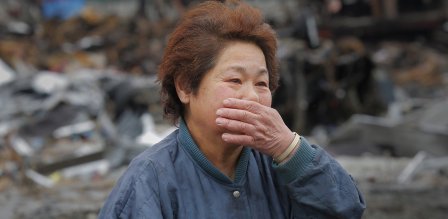

The tragic events connected with Japan's devastating earthquake and tsunami have been compounded by the threat of major nuclear contamination, most especially the possibility of a meltdown in the Fukushima No. 1 nuclear power plant. Japanese authorities have evacuated 200,000 neighbors of that plant to protect them from radiation exposure should a full meltdown occur. The events unfolding in northern Japan certainly have created global concern, including needless health anxiety among friends and patients in Los Angeles, as the situation conjures up memories of the 1986, Soviet-era Chernobyl nuclear reactor meltdown that killed dozens. That catastrophe resulted in the release of a cloud of nuclear toxins, especially radioactive iodine, which the winds carried for hundreds of miles, contaminating a large area. This led to a hundred-fold increase in thyroid cancer in children and adolescents in the Belarus and Ukraine regions. Most of the radioactive iodine was inhaled; some was ingested from contaminated produce and from milk produced by cows feeding on contaminated grass.
The thyroid, the butterfly shaped gland beneath the Adam's apple in the neck, requires iodine to make thyroid hormone, which is needed to maintain normal metabolism. The iodine is absorbed from the diet, enters the bloodstream and is concentrated in the thyroid. Thus, radioactive iodine also will concentrate in the thyroid and can damage DNA in thyroid cells. This can lead to the formation of benign and malignant thyroid nodules. Infants and children are the most susceptible to radioactive iodine's harm, because their thyroid cells actively are dividing as kids grow. Adults are relatively resistant to tumor-causing effects of radioactive iodine.
The best way to protect the thyroid from radioactive iodine's damage is to prevent exposure in the first place through evacuation or "in-place" sheltering. Another effective way is to administer potassium iodide (KI). The iodine in KI competes with the radioactive iodine for uptake by the thyroid gland. The more "cold" iodide given in the form of KI, the less radioactive iodine that can be taken up by the thyroid. The effectiveness of KI in protecting the thyroid gland was demonstrated by Poland in the Chernobyl crisis. Polish authorities administered it to half a million children younger than 16 and 17 million adults. Poles, despite their Chernobyl-related exposure to radioactive iodine, recorded no increase in thyroid cancer.
In the United States, the history of KI treatment, discussed since the 1950s Pacific atoll nuclear tests, has been fraught with missteps, including a flawed attempt to deploy the therapy after the Three Mile Island accident in 1979. By 2001, the Nuclear Regulatory Commission had issued a guidance to the States that they should consider KI to protect the public within a 10-mile radius of commercial nuclear power plants. That same year the FDA published a guidance, "Potassium Iodide as a Thyroid Blocking Agent in Radiation Emergencies," in which regulators suggested that infants from birth to 1 month should receive 16 mg of KI; between 1 month and 3 years, 32 mg; and children ages 3-12, 65mg of KI. Youths from ages 12 to 18, the FDA said, also should receive a 65 mg dose, unless they are close to adult size, in which case they should receive adult-recommended 130 mg. Those older than 40 should receive KI only on the release of a very large amount of radioactive iodine because they're far less likely to develop problems from it. Pregnant and lactating women should receive at least a single dose of the KI. Potassium iodine protects the thyroid for 24 hours and generally only one to two doses would be required. The anticipated risk of further exposure decreases rapidly as the radioactive cloud disperses. Potassium iodide is available over-the-counter and is usually distributed by local authorities free of charge to residents living in proximity to a nuclear reactor. It stays good for at least five years. It is best taken 6-12 hours before exposure, but will have some efficiency if taken up to four hours after exposure. KI will not protect against the often deadly harm of other radioisotopes released in a meltdown
There are few side-effects to KI and generally they are mild. The Polish experience indicates the most frequent complaint is gastrointestinal distress, especially among children, which was primarily due to the bad taste of KI. The taste can be disguised by crushing a tablet and putting it into raspberry syrup, low-fat chocolate milk or orange juice. About 1% of children and adolescents develop a rash. Other potential risks include allergic reaction to the iodine, which is rare, and irritation of the salivary glands. Those with a history of iodine sensitivity, dermatitis herpetiformis or vasculitis should not take KI. Individuals with multinodular goiters may develop hyperthyroidism and patients with Graves' disease, an autoimmune process that leads to hyperthyroidism, may experience a worsening of their condition. Also, people with autoimmune thyroid disease may develop hypothyroidism when given a large dose of iodide. In the Polish experience, less than a half percent of newborns developed transient hypothyroidism. Though of concern because of the need for thyroid hormone for normal brain development, it did not appear to harm the infants with this transient thyroid problem.
rime Minister Najib is not really serious in wanting to implement what he espouses since taking over the premiership.
Whatever he has done thus far are only on ad hoc basis with no consideration for the future. His mind, heart and soul are only concentrating on how to win big in the coming 13th GE and nothing else.
He laid out his economic plans with a string of acronyms which you and I the common layman could not understand and even more confused when they are explained by his incompetence (whether through the back door or front door) ministers. What we can understand simply is that we must have huge projects which are good for the economy and subsidies cut to sustain the economy and prevent the country from going bankrupt.
Question is, do we feel or get any benefits trickling down from these huge projects, no, but I am certain that cronies and well connected businessmen will gain a lot. We gain nothing from the huge projects but we definitely can feel the effect of the subsidy cut.
The PM has no idea at all how to run and manage the country other then to please a handful of cronies and party supporters to ensure he remain in power.
Does he knows that the whole system of running the country need to be overhauled completely and the old system of divide and rule using race and religion have to be discarded totally.
You can argue that I am wrong and that the PM had came out with "1Malaysia, People First Performance Now". Good, very good indeed, but after nearly two years what have become of it and what results have it shown, nothing, zilt, zero, instead the ethnic and religious harmony have turn for the worst.
Do I need to go on with his "People First Performance Now" rhetoric, I guess not, you can see and judge for yourselves from the complains and public dissatisfaction that are reported daily.
How can cutting of subsidies prevent the country from bankruptcy when the government is spending like nobody business. We are paying ministers to do their job, we have foreign minister to deal with foreign countries but the PM is using his wife to represent the country, touring the world and acting like a de facto PM.
Why is the PM so proud of reducing toll rate for one or two selected highways instead of studying the whole country highway toll system and work out a fair solution on whether to reduce the rate or remove the toll completely?
Why is the PM throwing millions to Felda, teachers and schools only during by-elections or approaching general election? Is there no proper planning at all how to distribute equally and fairly to the people from Perlis to Sabah on a long term basis?
All in all, as a common layman, what I can see is that you will get what is due to you only when there is an impending election. I do not see any long term planning to help the poor, revitalised the education system, stopping police abuse, practicing true democracy and revamp the justice system. Lastly, there is totally no will power to fight corruptions, I am talking about the millions and billion ringgit cases and not the 2,400 ringgit case that got an innocent man killed.
I am not a good writer, journalist, editor or expert that can explain in detail or spin about the PM rhetoric and slogans. I am just a common layman living a simple life and I am writing from my daily observation of working class people slogging day in day out just to survive through each month. There is totally nothing that we can see or have received from the PM economic plans, all but just hot air. I am not that stupid to be fooled again by the same government that had ruled for 0ver 50 years.
My fellow Malaysians, we have lived in a wooden attap house, which is fine and good initially, no leakages, strong wooden stilt and very resistant to heavy wind and rainfall. Today after 53 years we are still living in this same house, the roof have been patch until it can no longer be patched, the wooden stilt had rotten and it may collapse any day, it cannot stand any strong wind or heavy rain anymore. Don't you think its time to tear it down and rebuilt with concrete, bricks and mortar?
I am for change, that is the only way we can rebuilt our country that can hold all Malaysians together, a truly satu bangsa satu negara environment.
Time to discard the old Umno/BN and go for the new Pakatan Rakyat.
Whatever he has done thus far are only on ad hoc basis with no consideration for the future. His mind, heart and soul are only concentrating on how to win big in the coming 13th GE and nothing else.
He laid out his economic plans with a string of acronyms which you and I the common layman could not understand and even more confused when they are explained by his incompetence (whether through the back door or front door) ministers. What we can understand simply is that we must have huge projects which are good for the economy and subsidies cut to sustain the economy and prevent the country from going bankrupt.
Question is, do we feel or get any benefits trickling down from these huge projects, no, but I am certain that cronies and well connected businessmen will gain a lot. We gain nothing from the huge projects but we definitely can feel the effect of the subsidy cut.
The PM has no idea at all how to run and manage the country other then to please a handful of cronies and party supporters to ensure he remain in power.
Does he knows that the whole system of running the country need to be overhauled completely and the old system of divide and rule using race and religion have to be discarded totally.
You can argue that I am wrong and that the PM had came out with "1Malaysia, People First Performance Now". Good, very good indeed, but after nearly two years what have become of it and what results have it shown, nothing, zilt, zero, instead the ethnic and religious harmony have turn for the worst.
Do I need to go on with his "People First Performance Now" rhetoric, I guess not, you can see and judge for yourselves from the complains and public dissatisfaction that are reported daily.
How can cutting of subsidies prevent the country from bankruptcy when the government is spending like nobody business. We are paying ministers to do their job, we have foreign minister to deal with foreign countries but the PM is using his wife to represent the country, touring the world and acting like a de facto PM.
Why is the PM so proud of reducing toll rate for one or two selected highways instead of studying the whole country highway toll system and work out a fair solution on whether to reduce the rate or remove the toll completely?
Why is the PM throwing millions to Felda, teachers and schools only during by-elections or approaching general election? Is there no proper planning at all how to distribute equally and fairly to the people from Perlis to Sabah on a long term basis?
All in all, as a common layman, what I can see is that you will get what is due to you only when there is an impending election. I do not see any long term planning to help the poor, revitalised the education system, stopping police abuse, practicing true democracy and revamp the justice system. Lastly, there is totally no will power to fight corruptions, I am talking about the millions and billion ringgit cases and not the 2,400 ringgit case that got an innocent man killed.
I am not a good writer, journalist, editor or expert that can explain in detail or spin about the PM rhetoric and slogans. I am just a common layman living a simple life and I am writing from my daily observation of working class people slogging day in day out just to survive through each month. There is totally nothing that we can see or have received from the PM economic plans, all but just hot air. I am not that stupid to be fooled again by the same government that had ruled for 0ver 50 years.
My fellow Malaysians, we have lived in a wooden attap house, which is fine and good initially, no leakages, strong wooden stilt and very resistant to heavy wind and rainfall. Today after 53 years we are still living in this same house, the roof have been patch until it can no longer be patched, the wooden stilt had rotten and it may collapse any day, it cannot stand any strong wind or heavy rain anymore. Don't you think its time to tear it down and rebuilt with concrete, bricks and mortar?
I am for change, that is the only way we can rebuilt our country that can hold all Malaysians together, a truly satu bangsa satu negara environment.
Time to discard the old Umno/BN and go for the new Pakatan Rakyat.
I have received numerous calls from patients and friends worried that Japan's nuclear power plant woes will release a cloud of radioactive iodine that will affect us on the West Coast. Though events continue to develop, this would be most unlikely to occur. The Fukushima No. 1 power station has significantly better safety systems than did Chernobyl, and even if there were a total coolant failure, there will be much less radiation released than in 1986. Japanese authorities also acted rapidly to take control of their situation, again minimizing the major environmental risk. Finally, the distance between Japan and the West Coast is so large, the risk of a significant increase in radiation being detected here is very low. So, while it is nice to be prepared with information, I would not suggest running out to stock up on KI at this time.
When it comes to the safety of nuclear power plants, I am biased. And I'll bet that if President Barack Obama had been with me on that trip to Chernobyl 24 years ago he wouldn't be as sanguine about the future of nuclear power as he was Tuesday in an interview with a Pittsburgh television station: "Obviously, all energy sources have their downside. I mean, we saw that with the Gulf spill last summer."
Sorry, Mr. President, but there is a dimension of fear properly associated with the word nuclear that is not matched by any oil spill.
Even 11 months after what has become known simply as "Chernobyl" I sensed a terror of the darkest unknown as I donned the requisite protective gear and checked Geiger counter readings before entering the surviving turbine room adjoining plant No. 4, where the explosion had occurred.
It was a terror reinforced by the uncertainty of the scientists who accompanied me as to the ultimate consequences for the health of the region's population, even after 135,000 people had been evacuated. As I wrote at the time, "particularly disturbing was the sight of a collective farm complete with all the requirements of living: white farm houses with blue trim, tractors and other farm implements, clothing hanging on a line and some children's playthings. All the requirements except people."
Back then, working for the Los Angeles Times, I had been covering the nuclear arms race, and my invitation to be the first American newspaper reporter to visit Chernobyl came from one of Mikhail Gorbachev's top science advisers, Yevgeny P. Velikhov, whom I had interviewed on arms control issues.
Velikhov had led the effort to contain the damage at Chernobyl, risking his health in the immediate days after the incident by flying low over the contaminated reactor site in a helicopter, as well as by scaling the sidewall of the damaged reactor to more accurately evaluate the situation.
His point in arranging my visit was to demonstrate the terrifying consequence of a "peaceful" nuclear explosion, let alone one resulting from a weapon designed to inflict mass destruction. It was an argument he advanced with the military in his own country about the folly of nuclear war-fighting scenarios: "After two weeks of discussion with the army corps, I asked how you wish to survive a nuclear war if you have no possibility to clean this small piece of nuclear garbage."
This was a sentiment echoed by Harvard physicist Richard Wilson, who also made that Chernobyl trip, and who pointed out that with nuclear weapons "one is dealing with a technology designed to explode that is also under the control of human beings."
An important lesson that should be reinforced by the ongoing disaster in Japan is to worry more about the elimination of those nuclear weapons designed to explode, and another is to be concerned about the prospect of sabotage of nuclear power plants. This last is a reason to rely less on nuclear power in a world made volatile not only by natural disasters but through the concerted efforts of those who can fly airplanes into targets of their choice. At the very least, the expense of properly maintaining the internal safety and external security of power plants should be considered in any cost-benefit analysis of their usefulness as an alternative source of energy.
I know there will be an attempt to sell us the argument that the odds of a catastrophic earthquake and a catastrophic tsunami occurring together in an area containing a nuclear power facility are incredibly low, that the Japanese plants in question were of inadequate design and, as in the case of Chernobyl, that "human error" was at fault. Despite the earlier accident at Three Mile Island in Pennsylvania, there was a strong tendency to present the Chernobyl disaster as a warning sign not about nuclear power in general but rather the particular failures of a rotting Soviet economy.
After the Japanese experience, such cavalier dismissal of the intrinsic problems of nuclear power is no longer plausible. Recall that it was Obama himself who in October 2009celebrated Japan as the model for nuclear power expansion: "There is no reason why, technologically, we can't employ nuclear energy in a safe and effective way. Japan does it and France does it, and it doesn't have greenhouse gas emissions. ..."
As journalist Kate Sheppard points out in Mother Jones online:
Nuclear power is part of the "clean energy standard" that Obama outlined in the State of the Union speech in January. And in the 2011 budget the administration called for a three-fold increase in federal loan guarantees for new nuclear power plants, from the $18.5 billion that Congress has already approved to $54.5 billion. "We are aggressively pursuing nuclear energy," said Energy Secretary Steven Chu in February 2010 as he unveiled the budget. ... In Monday's White House press briefing, press secretary Jay Carney said that nuclear energy "remains a part of the president's overall energy plan."
Trust me, this is not the way we want to go.

No comments:
Post a Comment